We are proud to provide exceptional patient care in a warm and friendly environment.
Private dentistry offers you:
Adult check-ups from just £39 | Child check-ups from £19 | Free check-ups for under 5s with a private adult check-up
Speak to our friendly reception team or call to book your appointment.
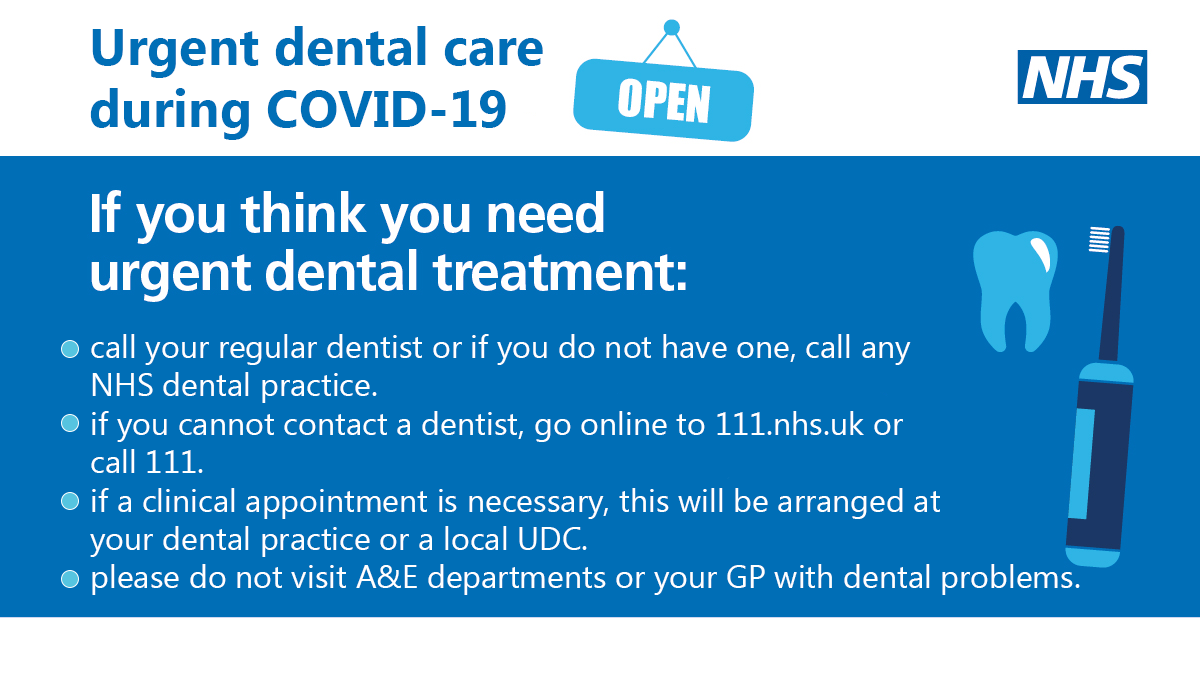
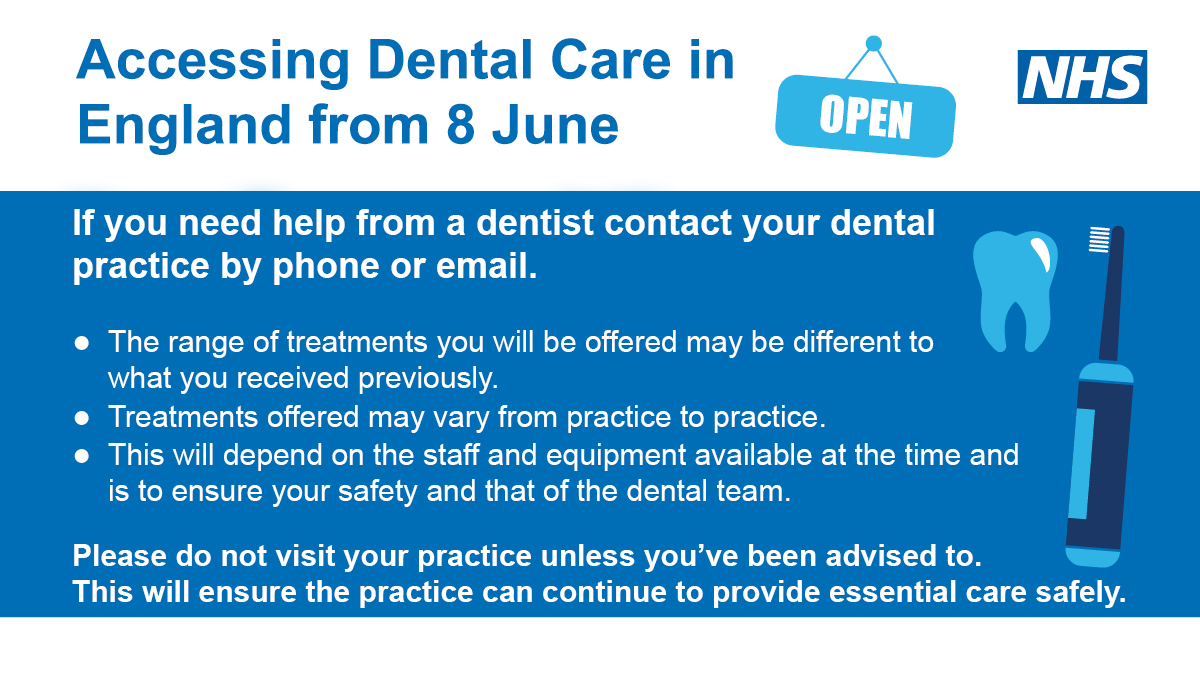
On Thursday 28th May the government announced that dental practices would be able to reopen for face to face contact from the 8th June. We are awaiting guidance on what exactly this means. Unfortunately, it will not be a return to the way things were. The front door will be closed and we ask you to call the practice to make arrangements. Appointments will be longer, they will need to be carefully organised, and the range of treatments we can offer at this stage will be very limited.
In the initial weeks we will be seeing the most urgent cases first . We anticipate heavy demand and will need to prioritise who we see. Please don’t be offended if we need to delay your treatment or postpone it. Gradually there will be a return to more routine treatment but the appointments will be longer and treatments are likely to be different.
The reception desk remains open for telephone advice. If you have a problem, please do call and we will do our best to help you. If you are wanting a checkup, cleaning or cosmetic work, you are welcome to contact the desk or send an email (reception.select@ntlbusiness.com), but please be aware that we will not be able to offer you an appointment at the moment.
Thank you for your patience and the very positive support we have had from our patients.